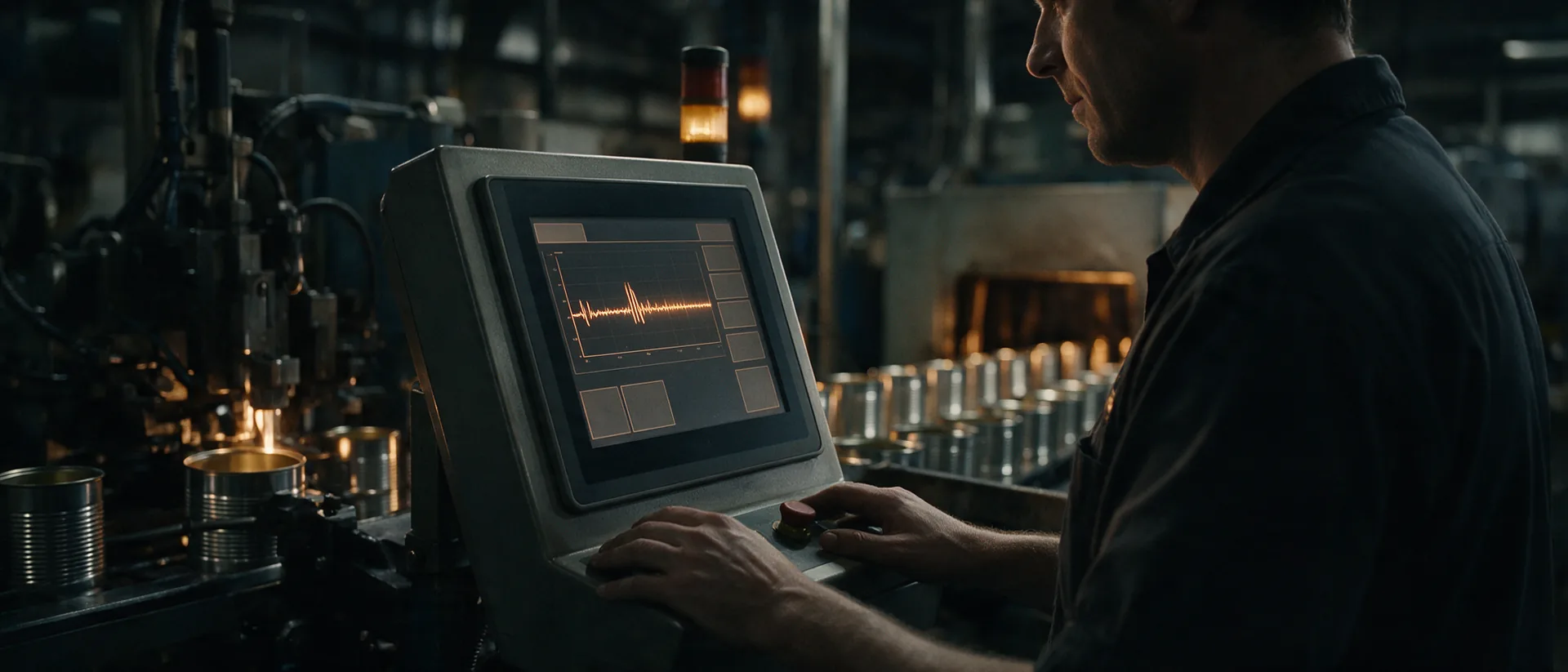
Modernize the line, module by module.
Retrofit kits, rebuilt machines and per-weld monitoring from a builder that still ships parts for machines made thirty years ago.
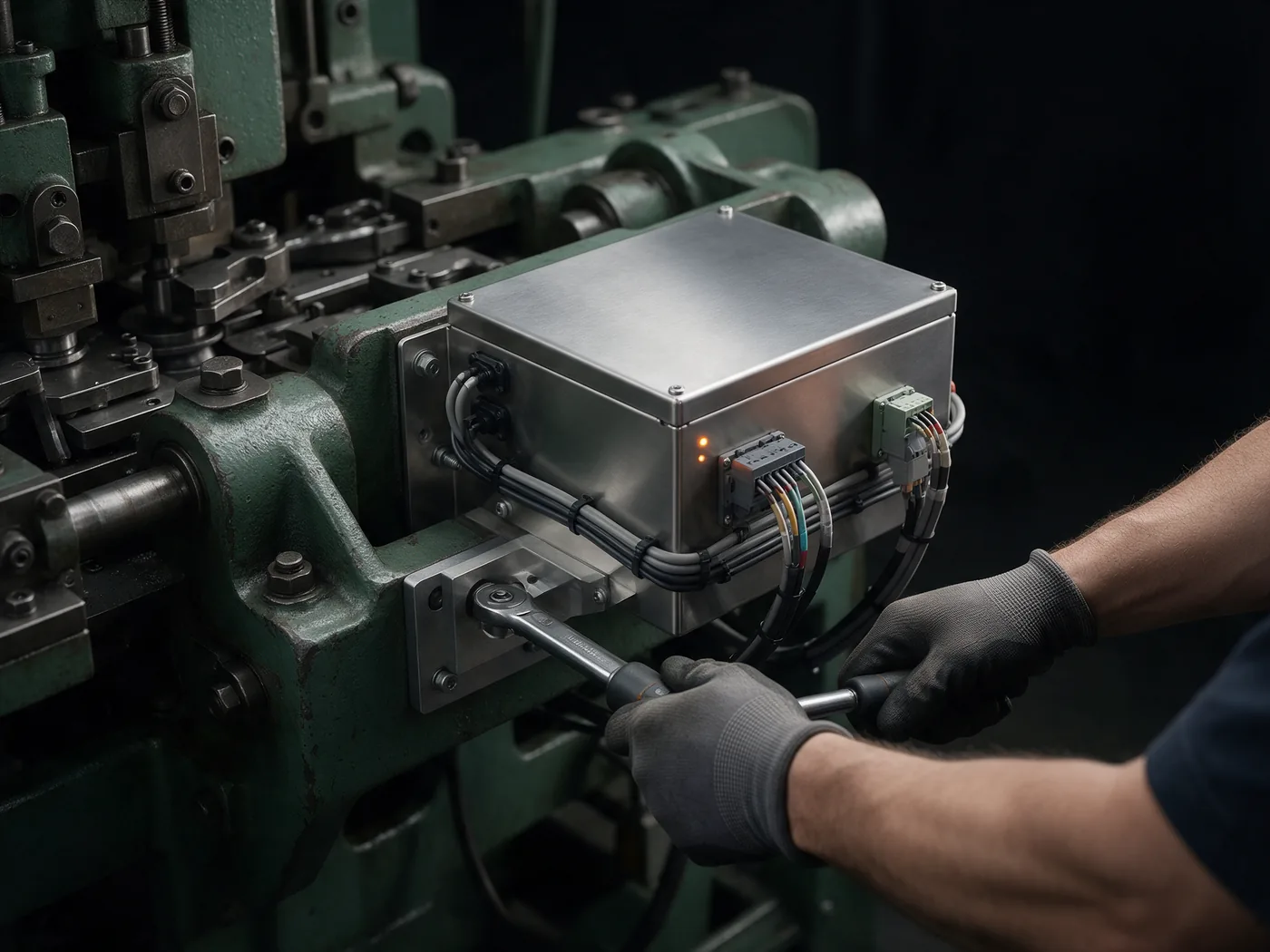
Keep what runs. Replace what's holding it back.
-
Controls nobody supports anymore
Once the drive or the PLC goes out of production, a single failed board turns into a line-down event. An updating kit swaps the electronics and keeps the frame.
-
Parts you can't source
Wear items for the whole Cevolani machine line are stocked for immediate delivery, and older parts get sourced on request instead of reverse-engineered on your floor.
-
No budget for a new line
A rebuilt machine, or one new module, fits the capex cycle you actually have. It also comes with a document your finance team can read.
What gets swapped, and what stays put.
Four ways in. Which one fits depends on your make, model and year, so the review starts there, not with a quote.
Updating kits for welders, combi machines and presses
New drives, PLC and control panel on the machine you already own. Parameters get stored per can size, and the machine drops to standby on its own when the line stops.
A curler that connects to the presses you run
The CUD 520 is built for easy connection to existing presses, curls ends from 40 to 200 mm and handles DR8 material. It's the one module Cevolani rates for hookup to another maker's equipment.
Compound liner and pocket oven as a unit
Electronic nozzle, machine and mandrel speeds on separate drives, PLC control and a size change that touches very few parts. Available single or double.
Factory-rebuilt machines
A used Cevolani machine after a general overhaul at the plant in Italy, for lines where the budget rules out new equipment but not reliability.
Whether a module connects to what's on your floor is verified against your layout during the review. Nothing on this page assumes compatibility with equipment Cevolani didn't build, apart from the curler, which the manufacturer states.
Every weld on every can, measured.
The weld monitor fitted to Cevolani CBW welders. It reads each weld point on every can and pulls the bad ones before the oven.
Description from the manufacturer's current catalog (cevolani.eu, Welder). Threshold values and data export are confirmed with the WMC 573 data sheet, available on request.
- Measures
Every weld point on all cans produced, per the catalog. Not a sample.
- Analyzes
Checks the weld against the set parameters and shows the result on the welder screen.
- Rejects
Faulty cans leave the line on the conveyor between welder and oven, before coating.
- Powers
A static frequency converter distributes the welding current, with sinusoidal or square wave available at setup and lower energy use than earlier systems, per the manufacturer.
- Reaches
Modem connection on current machines lets Cevolani's electronics staff fault-find or update the program remotely.
What Cevolani puts in writing.
No claims about local technicians or U.S. inventory on this page. These are the services the manufacturer lists on its own site, and what each one means for a line in service.
- Spare parts. Wear and tear items stocked for immediate delivery across the entire machine line, and parts sourced for machines assembled over thirty years ago.
- Updating kits. Offered to modernize older-generation machinery without replacing it.
- Overhauling. Refurbished machines after a general overhaul performed at Cevolani.
- Test laboratory. Dimensional and destructive tests on your can or lid, at the plant, as part of machine acceptance.
- Layout to training. After-sales technicians supervise line layout, installation, start-up and training, for complete lines or stand-alone machines.
- Tele-assistance. Modem connection and machine programs that let the electronics staff enter the machine to fault-find or update.
“Our electronical or mechanical technicians can be on site in an emergency situation in 24-48 hours depending on your location.”
cevolani.eu, Services, as published. Quoted without edits.
That sentence is the manufacturer's, written from Italy. The response time that applies to your plant gets confirmed in writing during the review, with Crestpack as your single contact for it.
A modernization review. In writing, at no cost.
The Modernization and Obsolescence Review ends with a map of your line: what to keep, what to retrofit, what to rebuild, and what to leave alone.
You list the line
Make, model, year and a 1 to 5 condition score for each module, on the one-page inventory sheet we send you. Twenty minutes with a maintenance lead is usually enough.
We map each module
Against what exists: an updating kit, an overhaul, a new stand-alone machine, or nothing. Hookups to your presses are checked on your layout, not assumed.
You get a written finding
Per module: the recommendation, scope of work, downtime window and the inputs for your capex case. If a module should be left alone, the report says so.
Cevolani, Bologna, since 1800
A manufacturer that designs, builds and tests three-piece can and ends machinery at its own plant, and still supports what it sold decades ago. More than 0 machines built, by its own 2021 count.
The upgrade kits, rebuilt machines and lab tests on this page are its standard after-sales program, not a special arrangement.
Crestpack, McAllen, Texas
The North American counterpart for Cevolani equipment, run by Eurotecsa International LLC. The group behind it has integrated packaging lines since 1978, with a U.S. office since 2024.
One contact for the inventory, the technical reading and the follow-through, in your time zone.
Tell us what's on the floor.
Six fields. A can-making engineer reads it, not a call center.
- You'll hear back from a @eurotecsa.com address, not an autoresponder.
- If a module falls outside what Cevolani builds or services, we'll say so on the first call.
- No newsletter, no drip campaign, and we don't sell your information.