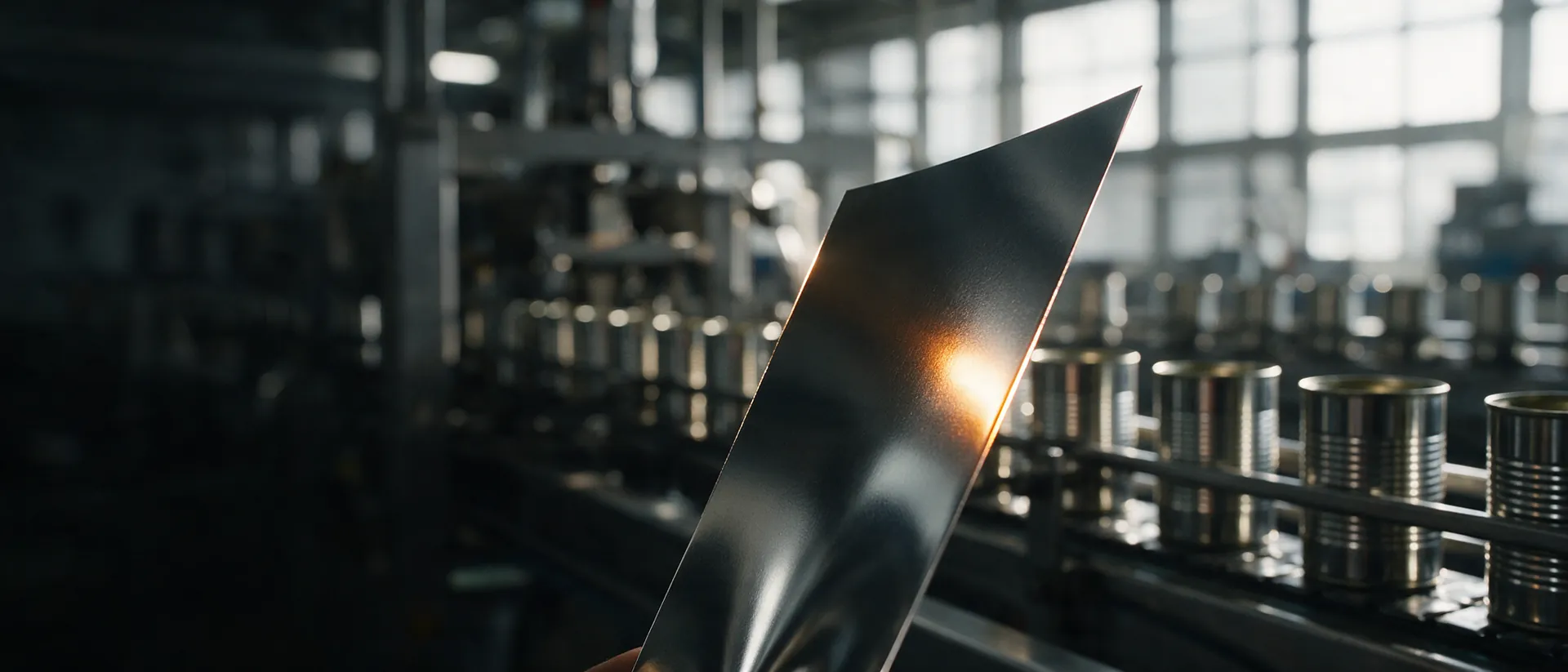
More cans from the line you already have.
Body modules that run thinner tinplate and do necking, beading and flanging in one machine. More output, no new line.
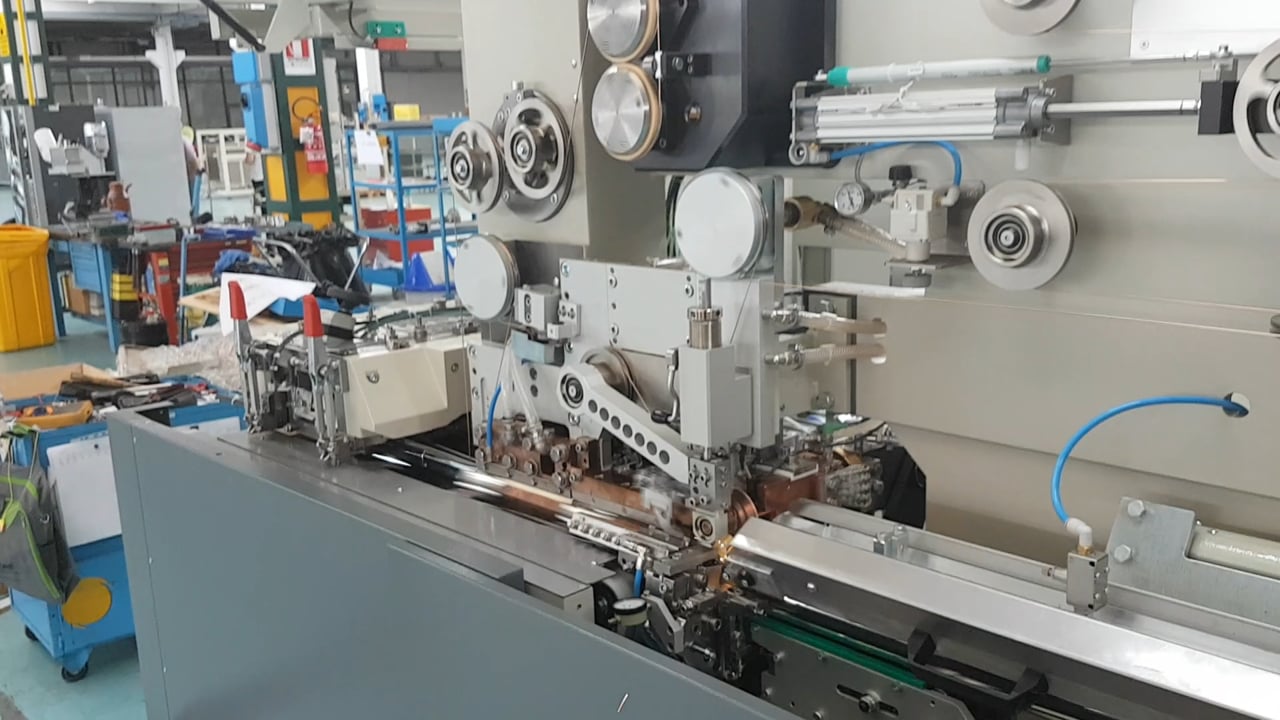
Cevolani's own recording of a CBW 2280 side-seam welder. Nominal machine speed is 1,000 cpm; what an integrated line delivers is what the assessment measures.
Get more from the line before you buy another one.
-
More volume on the same footprint
When extra production lands on your floor, the answer is usually one station, not a new line.
-
Growth without new capacity
Modules that lift output right where the line is constrained, on the space you already have.
-
Less steel in every can
Thinner tinplate through the forming stations, so metal cost stops climbing with volume.
The machine is not the reason your can is heavy.
What the forming station can handle is a published number. Whether a lighter can holds up on the shelf is a question for your product, and it's the first thing we look at with you.
Your gauge today
The number on your coil certificate. Tell us what it is and we'll show you what the difference is worth in steel, on your volume.
Cevolani published minimum
Catalog figure for the Combican Food BNA 489, RBNA 504 and RBNA 512 and for the CBW 2280 welder.
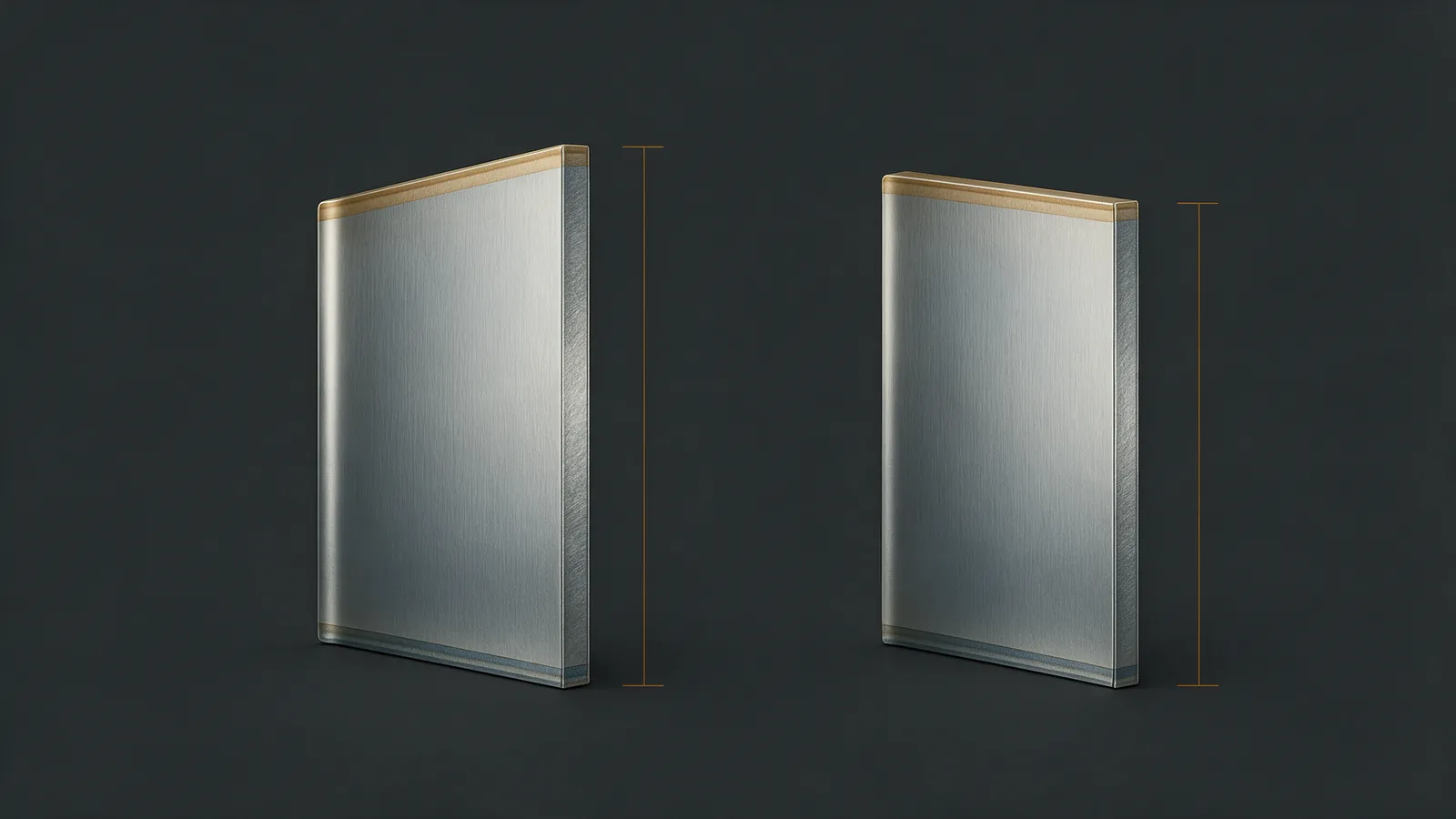
The illustration is schematic. The Cevolani figure comes from the manufacturer's current catalog; it's a machine limit, not a promise about your can.
Three places a body line gives back time and metal.
You don't replace the line. You replace the station that's holding it back. Cevolani builds each one as a stand-alone machine.
Necking, beading and flanging in one machine
Combican Food does it in three or four stations and carries the can inside the machine base instead of handing it between separate units. Every transfer you take out is one less place to jam or dent a can.
A welder built for thin, short bodies
The CBW 2280 holds full welding speed even on short bodies. Its WMC 573 monitor checks every weld on every can and pulls the bad ones off the line before they reach the oven.
Parameters stored per size
Every axis is its own servo under PLC control, with the settings for each format saved. When the line stops, the machine drops to standby on its own. Nobody re-sets it by hand.
Check your format before you talk to anyone.
A Cevolani Combican line running, and the catalog figures behind it. If your diameter and height fall outside these ranges, we'll tell you on the first call.
| Model | Stations | Diameter | Height | Thickness | Rate |
|---|---|---|---|---|---|
| BNA 489 | 3 | 52 to 105 mm (2.05 to 4.13 in) | 40 to 200 mm | 0.10 to 0.25 mm | 250 to 800 cpm |
| RBNA 504 | 4 | 52 to 105 mm (2.05 to 4.13 in) | 40 to 200 mm | 0.10 to 0.25 mm | 250 to 800 cpm |
| RBNA 512 | 4 | 52 to 105 mm (2.05 to 4.13 in) | 40 to 130 mm | 0.10 to 0.25 mm | 400 to 1,200 cpm |
| BNA 480 | 3 | 90 to 155 mm (3.54 to 6.10 in) | 90 to 260 mm | 0.13 to 0.30 mm | 100 to 350 cpm |
| Model | Body diameter | Body height | Thickness | Machine speed | Welding speed |
|---|---|---|---|---|---|
| CBW 2280 | 52 to 99 mm | 50 to 180 mm | 0.10 to 0.25 mm | 1,000 cpm | 120 m/min |
| CBW 2142 | 52 to 99 mm | 70 to 160 mm | 0.14 to 0.25 mm | 800 cpm | 100 m/min |
| CBW 2042 | 52 to 99 mm | 70 to 160 mm | 0.14 to 0.25 mm | 600 cpm | 80 m/min |
| CBW 530 | 45 to 189 mm | 50 to 320 mm | 0.12 to 0.30 mm | 500 cpm | 100 m/min |
Common U.S. formats inside these ranges: 202, 211, 300, 307 and 401 fit the 52 to 105 mm machines; 401, 404 and 502 fit the BNA 480. Larger diameters get checked one by one. Every figure here is nominal catalog capacity, not what an integrated line actually puts out. That gap is exactly what the assessment measures.
A line performance assessment. No cost, no line stoppage.
A structured look at where your body line is losing output and metal. The findings are yours, whatever you decide afterward.
You share the operating picture
The formats you run, current line speed, scrap by station, changeover time, oven consumption if you track it. Whatever you have on hand is enough to start.
We walk the line, remotely or on site
Sixty to ninety minutes. We map the flow, find where the constraint really sits, and separate what a module can fix from what it can't.
You get a written finding
The bottleneck, the modules that address it, and a metal-and-energy calculation built on your numbers with every assumption in plain view. If your line doesn't need us, that's what it will say.
Cevolani, building can lines since 1800
Founded in Bologna, Italy, and still designing, building and testing complete three-piece lines for food, aerosol and general line at its own plant. More than 0 machines built and more than 0 active customers, by its own 2021 count.
It still ships parts for machines built more than thirty years ago, and sells retrofit kits and factory-rebuilt machines. That matters if your plan is to stretch a line, not replace it.
Crestpack, McAllen, Texas
Your North American counterpart for Cevolani equipment, run by Eurotecsa International LLC. The group behind it has been integrating packaging and processing lines since 1978.
One person to call for the technical conversation, the quote and the follow-through, instead of a time zone and a language between you and the builder.
Tell us what you run.
Six fields. A can-making engineer reads it, not a call center.
- You'll hear back from a @eurotecsa.com address, not an autoresponder.
- If your format falls outside the published range, we'll say so right away.
- No newsletter, no drip campaign, and we don't sell your information.